

Approach
Using the DMM strategy for multiplication
A vision for vineyards, not just grapes
All around the world, we’re seeing growth in God’s Kingdom—but it’s not addition we’re seeing…it’s multiplication!
What excites us is, this is occurring in areas of the world typically resistant toward the Gospel.
Among rural and urban settings, among literate and illiterate, in places of persecution and freedom, among Muslims, Hindus, Buddhists, and Animists, we’re seeing movements of disciples who make disciples.
If you’re curious about the approach behind this compounding Kingdom growth, we’ve outlined the basics of our strategy on this page!

The Essential Elements
The process we follow
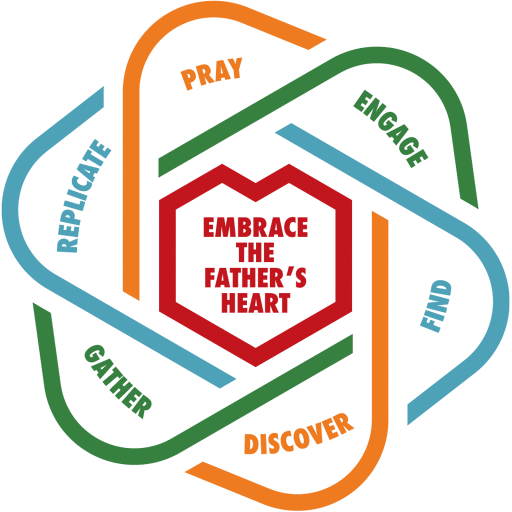
Execution of the DMM Process
A Disciple Making Movement happens when disciples make disciples and churches plant churches—again and again and again. Technically, we define a movement as at least 100 new churches that have multiplied to the fourth generation or beyond.
It’s important to know that movements don’t begin with mass events or programs. They begin the way Jesus began—with prayer, presence, and people.
This simple cycle shows how disciples are made, churches are formed, and new generations are reached. At the center is the Father’s heart because His love is the fuel behind it all.
Let’s quickly unpack each component to show how they work together to set in motion a chain reaction of Kingdom impact.
Here’s how movements begin and multiply:
1. Pray
Because movements don’t begin with strategies, they begin with surrender.
Before a disciple-maker enters a new village, before a conversation begins, someone is on their knees—asking God to open hearts, direct steps, and prepare the way. Prayer is the starting point because it re-centers us around the real leader of the movement: the Holy Spirit.
“We don’t go until we’ve prayed. Because until we pray, we don’t know where God is already at work.” —Field Leader, West Africa
2. Engage
Because after prayer comes presence.
Engagement isn’t loud or flashy—it’s local, personal, and often simple. A soccer ball. A shared meal. A neighbor who keeps showing up. These small acts build trust—and trust opens the door for deeper conversations.
We care deeply about the quality of the process along the way. With various training and coaching, we want to give local workers the tools they need to multiply the work of DMM in their own communities. But much of this process starts with a big paradigm shift toward Disciple Making Movements.
“They weren’t interested in church—but they were interested in soccer. And that’s where we started.” —Field Team Leader, West Africa
learn more3. Find
Because trust opens hearts, and curiosity opens conversations.
As relationships deepen, disciple-makers listen for signs of spiritual hunger. Questions begin to surface. Stories resonate more deeply. This is the moment to recognize a “person of peace”—someone open to spiritual truth who may become the gateway to a wider community.
In Burkina Faso, a man began listening to the Bible in his heart language. At first, his neighbor just overheard it through the wall. But when the audio player went quiet for a few days, the neighbor knocked on the door—not to complain, but to ask, “What happened to the stories?” That neighbor is now a follower of Jesus and a catalyst for new Discovery Bible Studies in the area.
“We thought no one was listening. But God had already prepared his heart—we just didn’t know it yet.” — Local leader, Burkina Faso
Learn more4. Discover
Because revelation begins with relationship.
When someone opens the Bible—whether on a printed page or through an audio player in their language—they’re not just learning about God. They’re discovering who He is for themselves. Through simple, obedient engagement with Scripture, lives begin to shift, and often, new spiritual communities are born.
In Cameroon, one woman began listening to an audio Bible at home and in the market. The voice was not her own, not even her husband’s—but it spoke her language. Soon, others began listening with her. A Discovery Bible Study formed. That group multiplied. And today, a growing movement traces its roots to that moment of personal discovery.
“It wasn’t a sermon that changed her. It was the sound of Scripture in her own language.” —Ending Scripture Poverty Facilitator, Cameroon
learn more5. Gather
Because disciples aren’t meant to walk alone.
As new believers grow in their faith, they begin to gather—sometimes under trees, in alleyways, or in living rooms—to pray, worship, and obey what they’ve discovered in Scripture. These simple gatherings become churches: spiritual families centered on Jesus, shaped by His Word, and committed to making more disciples.
In Côte d’Ivoire, a tribal leader known for wearing ceremonial masks and performing rituals began following Jesus after hearing the Bible in his own language. Once feared, he is now leading others to faith and helping them form new gatherings of believers. What was once spiritual darkness has become a multiplying community of light.
“When someone respected for darkness starts walking in truth, people follow.” —Field Team Leader, Côte d’Ivoire
6. Replicate
Because the Gospel doesn’t stop with us.
In healthy movements, churches don’t just grow—they multiply. New believers become disciple-makers. New churches plant more churches. And the cycle continues, fueled by obedience, simplicity, and the power of the Holy Spirit.
Among the Pygmy tribes on the border of Congo and the Central African Republic, entire villages have migrated deep into the forest—yet the churches keep multiplying. Audio Bibles now travel with them, allowing Discovery Bible Studies to form even before planters arrive. In just six months, six generations of churches have taken root.
“The audio players go where we can’t. And the Word moves faster than we do.” —Ending Scripture Poverty Coach, Central Africa
Embrace the Father’s Heart
Because God’s love is the reason—and the engine—for it all.
Disciple Making Movements aren’t powered by strategy. They’re powered by God’s love.
At the center of every prayer, every conversation, and every step of obedience is the Father’s heart—a deep, relentless love for His children. This is where movements begin and where they return. Not with a task list. But with identity.
We don’t make disciples to earn God’s approval. We make disciples because we already have it. We’ve been adopted, forgiven, and sent. And now we go—with love, for love, from love.
“When we remember who we are—sons and daughters—everything else flows more freely.” —Andy Lehmann, President
Common Terms and Phrases
We define a movement as at least 100 new churches that have multiplied to the fourth generation. We believe God calls us to the Disciple Making Movement approach, and if you hang out with us long enough, you’ll see that term used repeatedly—DMM. It’s an approach that involves each disciple of Christ being obedient within his or her network of influence in a way that engages the lost. A thorough outline of our DMM approach is listed below!
The concept of the “person of peace” is found in Mt. 10 / Lk. 10. The key characteristics of this person are that they have both spiritual interest and community influence. The person of peace is the natural bridge into the community.
The first DBS should be formed among the friends and family of the person of peace and facilitated by whoever is the “inside leader.” The idea is to “start like you want to finish.” Since our goal is a chain reaction of locally-led DBS groups that multiply in natural networks, it is imperative that the leadership come from within.
The purpose of this group is for spiritually interested people to discover God’s will and to help each other to obey Him immediately. The process is simple. The group responds to 4 fundamental questions about a passage or story from the Bible:
- What does it say? (word for word)
- What does it mean? (in my own words)
- What will I do in response? (obedience)
- Who can I tell? (the foundation for replication)
For illiterate or oral cultures, the interaction with the Bible may come in the form of audio Scripture or storytellers recounting biblical narratives.
Instead of having someone teach the Bible, the group discovers truth together so they will learn to listen to and obey the Holy Spirit. This approach does not diminish the gift of teaching. It roots a DNA of personal discovery before the gift of teaching is applied.
We define a church as “A group of baptized believers who meet on a regular basis for worship, nurturing, fellowship, and the sacraments; and who endeavor to obey all the commands of Christ.”
The results have been incredible so far. And yet, the real story is not found in the number of people turning to Jesus today, but in the implications for world missions in the days to come. Watching God work through Disciple Making Movements has left us in awe of what He’s capable of doing in the present and waiting in great anticipation for what He will do in the future.

Resources
Learn more about DMM